How High Should a 3-Year-Old Count?
How High Should a 3-Year-Old Count?
Counting skills develop gradually, naturally, and uniquely for every child. We’ve found that many parents worry about their three-year-old’s number recognition abilities, especially when comparing them to other children. While most preschoolers can count to ten, we’ll help you understand what’s truly normal for this age group and how to foster your little one’s mathematical growth. Let’s explore the key milestones that shape early counting development.
Key Takeaways
- Most 3-year-olds can typically count to ten, which is considered the standard developmental milestone for this age.
- Children at this age often recite numbers from memory rather than fully understanding numerical concepts.
- Some toddlers may count beyond ten, but mixing up the number sequence is completely normal at age three.
- One-to-one correspondence, matching objects to numbers while counting, begins developing around age three.
- Not reaching counting to ten by age three warrants discussion with a pediatrician for developmental assessment.
Normal Counting Range for 3-Year-Olds
Most 3-year-olds can count to ten, though their understanding of numbers is still developing. We often see children at this age reciting numbers from memory, but they may not fully grasp what these numbers represent regarding quantity.
Your child’s counting abilities can vary considerably at this stage. While some toddlers might count beyond ten, others may mix up the sequence – and that’s perfectly normal.
We encourage focusing on number comprehension rather than reaching high counts. When children can match objects to numbers and understand one-to-one correspondence, they’re building a strong foundation for future mathematical success.
Developmental Stages of Early Counting
When children begin their counting journey, they progress through distinct developmental stages that build upon one another.
We’ll often see infants as young as 12-18 months showing they can differentiate between small sets of objects, though they can’t count them yet.
By age two, they’re experimenting with number words, even if out of sequence.
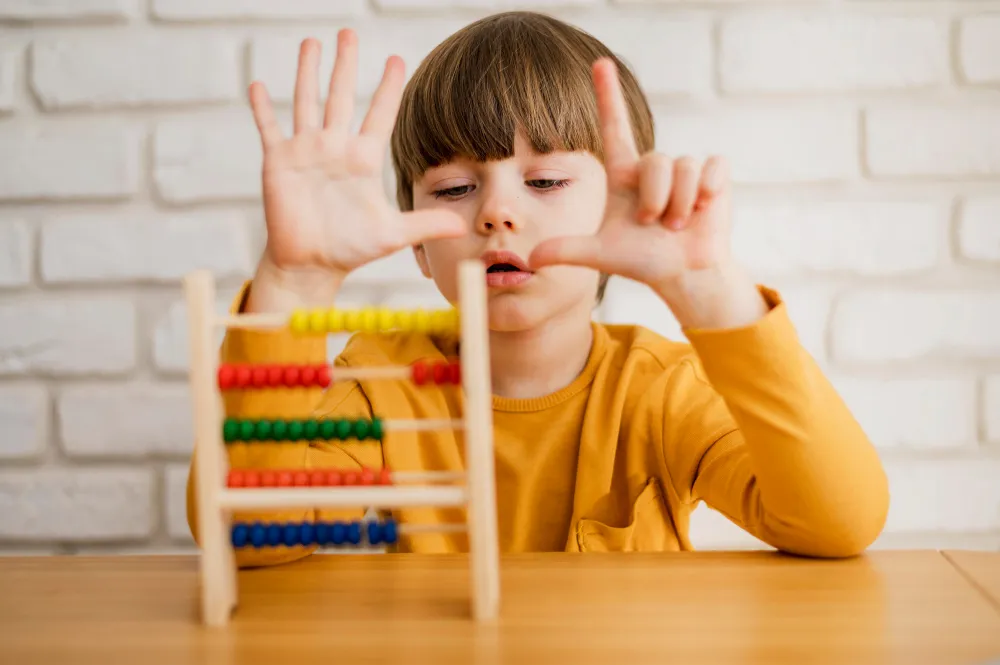
Around age three, they’re mastering one-to-one correspondence, connecting each object to a number.
The breakthrough comes at ages 3-4, when children understand that the final number represents the total quantity.
Supporting Your Child’s Number Skills
Supporting your child’s journey with numbers doesn’t have to feel like a challenging task. We can make learning fun by incorporating counting into everyday activities, from sorting laundry to setting the dinner table.
Let’s engage them with interactive games, counting songs, and number-rich stories that naturally build mathematical awareness.
To boost confidence, we’ll provide consistent praise while exploring numbers through hands-on activities like painting numerals or counting blocks.
Warning Signs and When to Seek Help
Parents need to recognize potential warning signs in their child’s counting development to address concerns early.
Summer Camp at River City Preschool
Ages 5–12 · May 28 – Aug 9 · 7am–5pm · Swimming, Sports, Field Trips & Meals included!
If your child consistently skips numbers, can’t engage in one-to-one counting with objects, or hasn’t reached counting to 10 by age 3, it’s worth discussing with your pediatrician.
We should also watch for signs like difficulty with patterns, limited number recognition, or disinterest in counting activities.
While every child develops differently, certain behaviors may indicate underlying conditions like dyscalculia or developmental delays.
Early intervention through professional evaluation can make a significant difference in your child’s mathematical journey.
Frequently Asked Questions
Can Watching Number-Themed Videos Improve a Three-Year-Old’s Counting Abilities?
Yes, we’ve found number-themed videos can boost three-year-olds’ counting abilities, especially when they’re part of a balanced learning approach with parental involvement and hands-on counting activities.
Does Counting in Multiple Languages Benefit or Confuse Three-Year-Olds?
Like planting diverse seeds in a garden, we’ve found teaching multiple counting languages enriches young minds. While some initial confusion’s natural, the cognitive benefits typically outweigh temporary hurdles in early development.
How Do Socioeconomic Factors Affect a Child’s Early Counting Development?
We can see socioeconomic factors strongly impact early counting through access to resources, parental engagement, and learning materials. Children from higher-income families often receive more exposure to mathematical concepts.
Should Parents Correct Counting Mistakes Immediately or Let Children Self-Discover Errors?
Let’s hit pause on that helicopter parenting! We shouldn’t jump to fix every counting error. Instead, we’ll guide our children through self-discovery while staying nearby to support their mathematical journey.
Are There Differences in Counting Abilities Between Firstborn and Later-Born Children?
We’ve found that birth order itself isn’t strongly linked to counting abilities. Rather, parental attention, resources, and family dynamics shape how children develop these skills differently.
Final Thoughts
Let’s remember that every child moves at their own pace when it comes to counting skills. While most 3-year-olds can count to ten, don’t put all your eggs in one basket by focusing solely on the numbers. We’ve seen how supporting their natural development through play and everyday activities works wonders. If you’re concerned about your child’s progress, trust your instincts and reach out to their pediatrician for guidance.
More Ways to Make the Most of River City
Exclusive programs and perks for River City Preschool families
Summer Camp 2026
A full summer of swimming, sports, field trips, and fun for kids ages 5–12. May 28 – August 9, 7am–5pm. Breakfast, lunch & snacks included!
Swimming Lessons
Expert swim instruction for all ages — from Baby Sharks (12mo+) to competitive Team Training. Build confidence and water safety skills.
50% Off The Clubs at River City
As a River City Preschool family, you get an exclusive 50% discount on membership — pools, tennis, fitness, and so much more!
More From River City Preschool