Raising a Bilingual Child: How Early Exposure Shapes Language Development

Key Takeaways
A toddler can be learning two languages at once, even if their words are not evenly divided between them. What matters most is meaningful communication over time, along with support that respects both languages.
- Babies begin noticing speech sounds and patterns before they can talk.
- A child’s vocabulary may be spread across both languages, so consider the full picture.
- Mixing languages is common and does not, by itself, mean a child is confused.
- Everyday conversations, stories, songs, and play create useful opportunities to communicate.
- If concerns persist, discuss your child’s communication in both languages with a pediatrician or a qualified speech-language pathologist.
How early exposure shapes language learning
Language learning starts well before a first word, as babies take in the sounds and rhythms around them. Over time, familiar voices and everyday exchanges help a child notice how communication works. That early foundation develops through ordinary moments, not just deliberate teaching.
Babies notice sounds and patterns before they speak
Long before they can answer, babies listen to the voices around them and respond with looks, gestures, sounds, and eventually babbling. They begin to recognize familiar speech patterns through repetition: the way a caregiver says hello, sings a song, or names something nearby. Those responses are early communication, even when no clear word is there yet.
Hearing two languages builds familiarity over time
A baby who regularly hears two languages is getting familiar with both, even if one is heard more often in a particular week or setting. The sounds may initially seem different to an adult, but repeated, warm interaction gives a child chances to recognize each language’s patterns. Families looking for more on the subject can read about rich early language exposure and how it supports learning over time.
Regular interaction matters more than perfect lessons
Parents do not need to turn daily life into a language class. Talking while getting dressed, responding to a child’s gesture, or naming what you see on a walk all give language a reason to be used. Warm, repeated exchanges are more useful than worrying about whether every phrase is perfectly planned.
Exposure can happen at home, in childcare, and in the community
A child may hear different languages with family, caregivers, neighbors, or other people in their community. Those settings can add variety to a child’s experience, though the specific languages and amount of exposure differ from family to family. River City Preschool provides full-day preschool and daycare in Peoria for infants through Pre-K; families can ask any care provider what languages are used in everyday interactions rather than assume.
What bilingual language development looks like in toddlers
Bilingual language development toddlers show can be hard to judge if a parent looks at only one language at a time. A child may use more words in one language and understand more in another, depending on the people and situations they encounter. It helps to look at communication across the child’s full day, not at a single conversation.
Milestones may look different across each language
Children learning two languages do not necessarily show the same vocabulary in both at the same moment. A toddler might use one language more with a particular caregiver, or hear one more often in a familiar setting. Differences between languages are only one part of the picture; also notice whether the child is communicating, understanding, and making progress over time.
Count words across both languages for a fuller picture
When you keep track of a toddler’s words, include words from both languages and note words the child uses regularly, even if pronunciation is still developing. A simple record can help you describe what you are seeing to a pediatrician or speech-language pathologist. These notes are not a diagnosis, but they can make the conversation more specific.
| What to record | Why it can help | Example note |
|---|---|---|
| Words in each language | Shows where a word is used | Names a familiar object in one language |
| Words used in either language | Gives a broader view of spoken vocabulary | Uses a word to ask for a snack |
| Ways of communicating | Captures more than spoken words | Points, gestures, or brings an adult to something |
| Changes over time | Helps reveal patterns | Begins using a familiar word in a new routine |
Look at the notes as a whole rather than treating one entry as a pass-or-fail measure. A child’s vocabulary can shift as new words become useful in different settings.
Vocabulary can be spread between languages
A toddler may know the name for a family member in one language and a word for a favorite toy in another. This is one reason a single-language word count may not capture everything a child can express. Consider what the child communicates across both languages, including words used with different people.
Comprehension often develops before fluent speech
A child may understand a familiar request or follow a daily routine before they can say much in response. Notice how they react when someone speaks, whether they follow familiar directions, and how they use gestures or expressions. Understanding is one meaningful part of communication, even when spoken language is still emerging.
Why toddlers mix languages
A toddler who moves between languages during a sentence is not necessarily doing anything unusual. Young children draw on the words and patterns they have heard, and their language choices can reflect what is easiest or most relevant in the moment. The surrounding listener and setting matter, too.
Code-switching is a normal part of bilingual communication
Using words from two languages in the same conversation is often called code-switching. Children may do it while speaking with family members who understand both languages, or when one word comes more readily than another. The mix can change as the child learns new words and as conversations change.
A child may use the word that comes to mind first
Toddlers are still building vocabulary, so they may choose the word they can retrieve quickly, whatever language it belongs to. A familiar word can be easier to say than a less-used equivalent. Adults can respond to the meaning, then naturally repeat or expand the idea without making the child feel corrected for communicating.
Mixing languages does not mean a child is confused
Switching languages is not, on its own, evidence that a child is confused or that learning two languages is harmful. A more useful focus is whether the child is able to communicate and understand in everyday situations across the languages they hear. If something about development worries you, seek an individualized assessment rather than relying on language mixing as a sign by itself.
Language choice can shift with the listener or setting
Some children use one language more with a particular caregiver and another with relatives or in a community setting. They may also change their choice when the people around them change. This can make a child’s language use look different from one day to the next, so consider who was present and what the conversation was about.
How bilingual children build skills in each language
Children develop language through repeated chances to communicate with people who respond to them. The helpful moments are often small: a back-and-forth over a toy, a familiar song, or a story read for the fifth time. They do not need to be formal to be valuable.
Conversation helps children connect words with meaning
When an adult responds to a child’s sounds, gestures, or words, the child can connect communication with an outcome: someone understood, answered, or joined in. Follow the child’s attention and talk about what is happening rather than insisting on a particular response. Shared attention gives words a clear place in the moment.
Songs, stories, and play make practice enjoyable
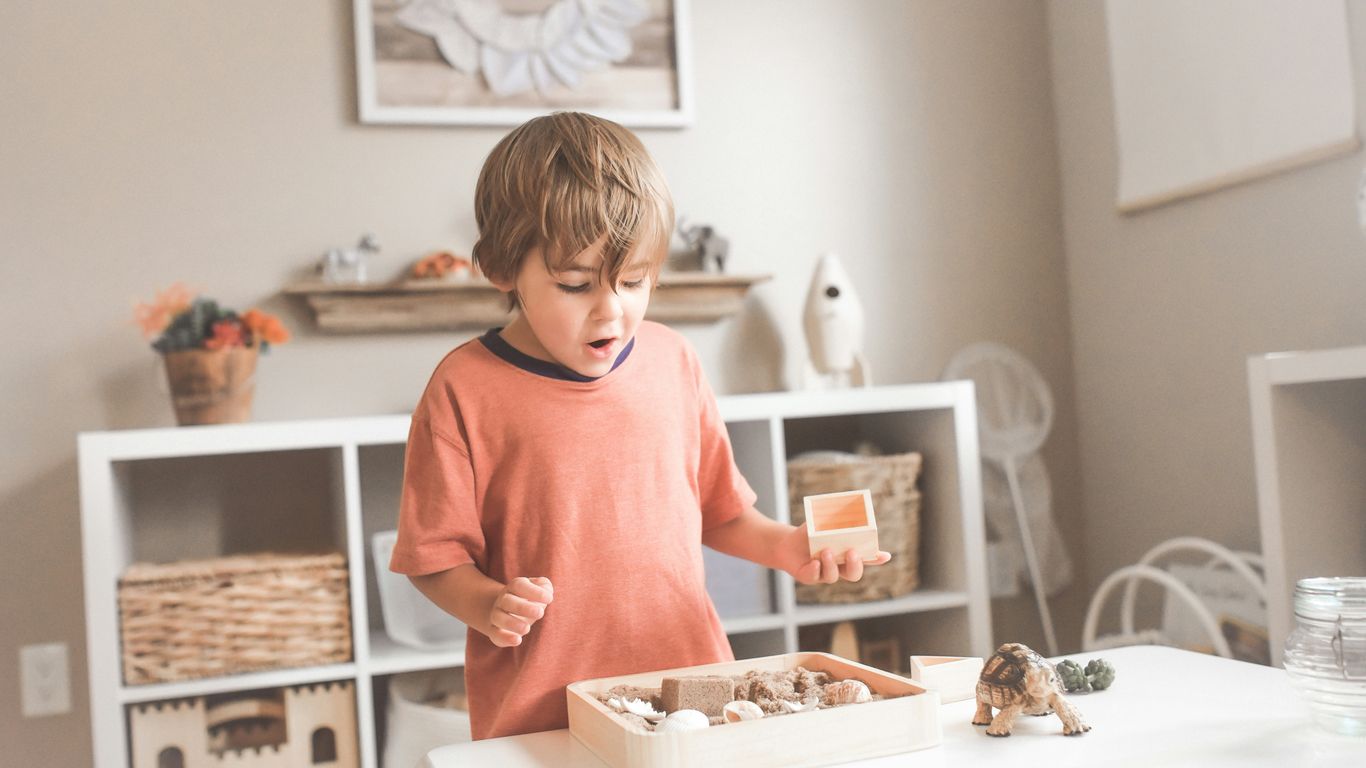
A familiar song or favorite story gives a toddler a chance to hear the same words and phrases again without the interaction feeling like a lesson. Play adds room for children to point, pretend, ask, and respond in their own way. Here is a simple example of the kinds of everyday moments that can invite communication.
Choose activities that fit your child’s attention and mood; repeating a favorite can be more inviting than introducing something new every time. The goal is connection, not a perfect performance.
Relationships with fluent speakers offer useful models
Regular time with people who comfortably use a language can give a child many natural examples of how it sounds in conversation. Those relationships may include parents, extended family, caregivers, or community members. What matters is that the child has meaningful opportunities to listen and take part, at a pace that feels comfortable.
Summer Camp at River City Preschool
Ages 5–12 · May 28 – Aug 9 · 7am–5pm · Swimming, Sports, Field Trips & Meals included!
Language use can change as a child’s routines change
A child’s words may shift when a new caregiver, schedule, or setting becomes part of the week. For instance, River City Preschool provides full-day preschool and daycare for infants through Pre-K, and families considering care can ask how a new routine might fit their child’s existing communication habits. A change in how often a language is used does not by itself tell the whole story of a child’s development.
Ways to support both languages at home
Supporting two languages does not require equal time in every language every day. Families can build on the people, routines, and activities that are already part of their lives. The aim is to keep both languages connected to real communication and relationships.
Choose routines that give each language a meaningful place
It can help to notice when each language naturally belongs in the family’s day, rather than trying to divide every hour evenly. A routine can offer repetition and familiarity while leaving room for a child to respond in either language. For example, families might make a particular language part of one or more of these moments:
- Greeting family members at the start or end of the day.
- Sharing a meal and talking about what is on the table.
- Reading a familiar book or singing a favorite song.
- Calling or visiting relatives who use that language.
Keep the routine flexible so it feels like an invitation, not a rule the child has to perform. If a child answers in another language, respond to what they mean and continue the exchange.
Talk, read, and play without turning practice into a test
Children are more likely to join in when communication feels shared rather than evaluated. You can narrate what you are doing, pause to let a child respond, or follow their lead in pretend play. There is no need to ask for a translation or repeat a question until the child gives a particular answer.
Share books and activities that reflect your child’s interests
A story about a favorite animal or a game involving a much-loved toy may hold a toddler’s attention longer than an activity chosen only for its language content. Use the languages that feel natural to you while reading, talking, or playing. A child who is interested in the moment has more reason to listen and participate.
Keep both languages connected to family and community
Language is more than a set of words; it helps children take part in relationships and family life. Peoria families considering care at River City Preschool can request enrollment information and ask about the age-group options available. When comparing care settings, parents can also ask practical questions about daily routines and how staff communicate with children.
When to seek advice about language development
It is reasonable to ask for guidance if you have ongoing concerns about how your child communicates, understands, or interacts. A professional can help consider the child’s experiences in both languages rather than judging one language in isolation. Seeking advice does not mean a family has done anything wrong.
Look at communication skills across both languages
Consider the child’s communication as a whole, including words, gestures, understanding, and attempts to connect with other people. Share what languages the child hears, who uses them, and when the child tends to use each one. That context can help a professional understand what you are noticing.
Consider how well your child understands and interacts
Think about how your child responds to familiar speech, shares attention, uses gestures, and takes turns in everyday exchanges. These observations are useful alongside spoken words, but no single behavior gives a complete assessment. Write down specific examples if it helps you explain your concern.
Talk with a pediatrician if concerns persist
If a concern continues, bring it up with your child’s pediatrician and describe what you observe in both languages. You can ask what next steps are appropriate and whether a referral would be helpful. It is better to ask for guidance than to assume that bilingual exposure explains every concern.
Find a speech-language pathologist familiar with bilingual children
A speech-language pathologist who has experience with bilingual children can consider the child’s communication across the languages they use and hear. If an assessment is recommended, share the child’s language history and ask how the evaluation will account for both languages. The goal is a clear understanding of the child’s individual strengths and needs.
Conclusion
Bilingual development unfolds through the conversations, relationships, and routines that make up a child’s life. A toddler may understand more than they can say, use different words in each language, or mix languages as they communicate; none of those patterns alone tells the whole story. Keep both languages part of meaningful daily interactions, and reach out to a professional when concerns persist.
Frequently Asked Questions
Can toddlers learn two languages at the same time?
Yes. Many children hear and learn more than one language from an early age. Their experience will depend on how, when, and with whom each language is used.
Does hearing two languages cause speech delay?
Hearing two languages does not, by itself, mean a child will have a speech or language delay. If you are concerned about your child’s communication, ask a pediatrician or speech-language pathologist to consider both languages.
Should I count words in both languages?
Yes. Include words the child uses in either language when you are describing their vocabulary. It can also be helpful to note what the child understands and how they communicate beyond spoken words.
Is it normal for a toddler to mix languages?
Language mixing is common among bilingual speakers, including young children. A toddler may use whichever word comes to mind or choose a language that fits the listener or situation.
What if my child understands more than they say?
Understanding familiar words, requests, and routines is one part of communication. If you have concerns about how your child communicates overall, describe both what they understand and what they say to a professional.
How can I support both languages at home?
Use the languages in everyday conversation, stories, songs, play, and family routines. Keep the interactions warm and responsive instead of turning them into a test.
When should I seek help for a bilingual toddler?
If concerns about communication persist, discuss them with your child’s pediatrician. You can ask for a referral to a speech-language pathologist familiar with bilingual development and share details about both languages.
More Ways to Make the Most of River City
Exclusive programs and perks for River City Preschool families
Summer Camp 2026
A full summer of swimming, sports, field trips, and fun for kids ages 5–12. May 28 – August 9, 7am–5pm. Breakfast, lunch & snacks included!
Swimming Lessons
Expert swim instruction for all ages — from Baby Sharks (12mo+) to competitive Team Training. Build confidence and water safety skills.
50% Off The Clubs at River City
As a River City Preschool family, you get an exclusive 50% discount on membership — pools, tennis, fitness, and so much more!
More From River City Preschool