What Is STEM Learning for Preschoolers — And Why It Starts Earlier Than You Think

Key Takeaways
STEM learning for preschoolers focuses on curiosity and problem-solving through play. These fundamental building blocks support lifelong cognitive growth and engagement with the world.
- Exposure to STEM concepts at a young age fosters critical thinking and analytical skills.
- Play-based discovery allows children to explore gravity, patterns, and logic in natural ways.
- Promoting a growth mindset turns challenges into valuable learning opportunities for developing minds.
- Parents play a key role by modeling curiosity and providing open-ended tools for exploration.
- Integrated STEM practices prepare children for future academic and professional success in a digital world.
Understanding STEM learning for preschoolers
Preschoolers are natural researchers, driven by an innate desire to understand how their world functions through constant interaction. At River City Preschool, we believe that providing tools for exploration is more effective than teaching dry facts. By engaging their senses, children naturally move toward deeper levels of inquiry and discovery.
Moving beyond traditional classroom subjects
Early education is shifting from rote memorization toward integrative thinking. Children do not naturally separate their activities into "science" or "math;" they engage with their environment as one big, complex puzzle. When they play, they are already building the foundation for complex thinking.
The interconnected nature of science, technology, engineering, and math
These disciplines overlap constantly in a child’s day-to-day life. Science involves observing a puddle, technology is using a spoon to measure sand, engineering is stacking blocks, and math is counting the results. Seeing these subjects as a unified experience helps children handle complex ideas earlier.
Developing critical thinking through hands-on exploration
Physical interaction with objects provides the best feedback for a child’s brain. When a toddler drops an object to see what happens, they are essentially conducting a field test of gravity. This tactile experience forms the bedrock of logic and reasoning that will support them throughout their schooling years.
Why early exposure builds a foundation for lifelong learning
Early contact with diverse problem-solving tasks builds neural pathways that facilitate future learning. Children who learn to ask "why" and "how" retain these instincts well into their elementary years. This habit of inquiry defines their approach to all future challenges.
Why early exposure sets the stage for success
Starting early allows children to treat complex problems with confidence rather than fear or hesitation. Our (River City Preschool enrollment) process focuses on cultivating this spark among the youngest learners in Peoria. Consistent exposure to experimentation normalizes the presence of technical and analytical thought from a young age.

Igniting curiosity during critical development stages
Preschool years are a period where the brain is uniquely primed to absorb new methods of understanding. When adults respond to their wonder with excitement, the child mirrors that behavior and deepens their involvement. This engagement cycle is the most potent tool in education.
Normalizing technical literacy from the start
Technical literacy isn’t just about screens; it is about knowing how systems work and how to interact with the natural and designed world. When children interact with simple mechanics or logic-based toys regularly, these tools become comfortable, familiar extensions of their creative potential.
Encouraging a growth mindset toward problem-solving
Children who are taught that the process matters more than the outcome develop resilience. They start to understand that failing at a build or mismeasuring a liquid is just data. This growth mindset toward experimentation keeps them coming back when things do not go as planned.
Preparing children for a technology-driven future
Exposing young learners to the logic of technology today ensures they are not intimidated by the complex systems they will surely encounter later. They learn that technology is something they control, design, and adapt, rather than just something they consume passively.
Breaking down the four pillars of STEM
Understanding the components of STEM helps educators and parents offer more diverse activities suited to different developmental needs. Each pillar offers a unique way for a child to interact with their environment at our River City Preschool facilities.
Science: asking questions and making observations
Science at this age is largely about the "why." It is about noticing changes in the weather, the lifecycle of a plant, or how water moves over a stone. Adults can assist by asking questions that steer observation without dictating the answer.
Technology: using tools to solve everyday challenges
Technology can be as simple as an egg-beater, a magnifying glass, or a digital camera used to document a nature walk. It involves selecting the right tool to complete a specific task or to better observe the world around them.
Engineering: designing, building, and testing structures
Engineering is the active side of learning. It is seeing if a tower made of light blocks stays upright as it grows higher. This practical testing helps children understand stability, center of gravity, and load-bearing principles in a visceral way.
Mathematics: exploring patterns, shapes, and measurements
Math is everywhere, from setting the table to sorting laundry by color. To help clarify how these four pillars function across developmental levels, consider the following breakdown of focus areas.
| Pillar | Preschool Activity | Skill Developed |
|---|---|---|
| Science | Nature journal entries | Observational skills |
| Engineering | Block tower stability | Spatial reasoning |
| Mathematics | Sorting shape blocks | Classification logic |
By focusing on these areas in daily life, children develop a comfort with numbers and shapes that simplifies more abstract concepts in the future.
Implementing STEM through play-based discovery
Discovery should remain an unforced, joyous exploration of the child’s environment. When children lead the way with their questions, the learning feels personal and lasting. Play allows for a low-stakes environment where every outcome contributes to their internal atlas of the world.
Turning block towers into lessons on gravity and balance
Building with blocks is one of the most effective ways to teach structural integrity. If a tower falls, it is not a mistake; it is a lesson in how height, width, and base weight interact. Children learn to adapt their strategy for the next attempt.
Investigating natural phenomena while outdoors
Nature provides an infinite source of STEM data. Tracking shadows, checking the temperature of soil, or observing how leaves settle in a stream provides constant opportunities for inquiry. This helps ground their learning in the reality of their local, physical world.
Incorporating digital tools safely and meaningfully
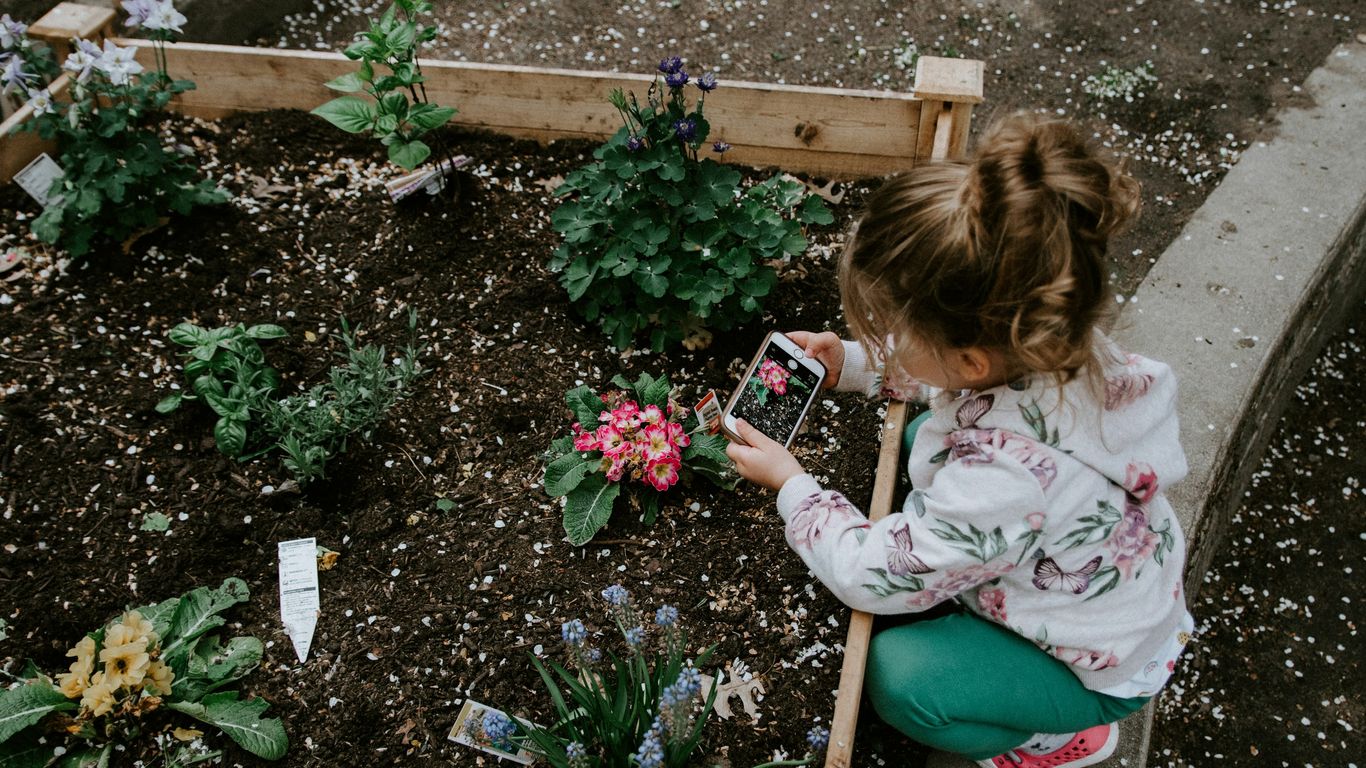
Using a tablet to record the birds seen in a park or capture close-up images of insects introduces technology as a research tool. When children control the device to explore, it shifts the focus from passive entertainment to active data collection.
Measuring ingredients in the kitchen as a sensory activity
Cooking is, fundamentally, a chemistry and math laboratory. Following a simple recipe involves counting, measuring volume, and predicting changes as solids turn into liquids. The sensory experience of kneading dough or mixing powders is excellent for reinforcing STEM concepts through touch and scent.
Summer Camp at River City Preschool
Ages 5–12 · May 28 – Aug 9 · 7am–5pm · Swimming, Sports, Field Trips & Meals included!
Establishing a routine for hands-on discovery
To ensure consistent play, we recommend keeping a reliable station for exploration ready at all times. Here are a few essential tips for setting up a mini-science station at home:
- Store clear containers filled with different textures like beans, sand, or stones.
- Keep magnifying glasses and rulers within easy reach of the floor area.
- Maintain a dedicated notebook for drawing or recording observations each day.
- Ensure all materials are safe for unsupervised use with simple supervision.
Having these materials ready creates a welcoming environment for when a child inevitably asks, "What happens if I try this?"
Strategies for encouraging a scientific mindset
Encouraging a scientific mindset means shifting from providing answers to facilitating the process of finding them. This requires patience and the willingness to let a child be wrong, as those moments contain the most potential for growth.
Asking open-ended questions to spark curiosity
Instead of asking "Is this red?", try "What do you notice about how the color looks in the light?" This opens a conversation rather than a quick, closed-ended check for knowledge. It signals that you value their perspective and observation.
Viewing project failures as essential learning moments
When a model fails or an experiment produces an unexpected result, it should be celebrated. Ask the child, "Why do you think that happened?" or "What could we change next time?" This frames the event as a necessary step toward success.
Connecting STEM concepts to personal interests
If a child is obsessed with cars, use physics to explore speed, friction, and slope. If they love gardening, focus on the math of planting and the science of growth. Using their passions ensures they remain internally motivated to participate.
Documenting and celebrating discoveries as a family
Keeping a family chart of "new discoveries" reinforces the value of being an observer. Documenting small wins, such as noticing a pattern in the constellations or building a perfect bridge, validates their efforts and encourages them to keep researching.
Common pitfalls of early STEM education
It is common to over-structure or rush children, but this often backfires by reducing their internal initiative. According to the before and after school care guidelines, balancing freedom with consistent, safe guidance is vital for success in these areas.
Avoiding the pressure to introduce formal academics early
Preschoolers are not ready for standardized assessments or deep academic drill-and-practice sessions. Pushing for formal structure too soon usually kills the joy that keeps them engaged and observant. Let the play dictate the speed of their learning.
Steering clear of overly structured or restrictive experiments
If an experiment has only one "correct" way to be performed, it ceases to be science and becomes a recipe to follow. Give children the liberty to explore their own methods, even if those methods don’t technically prove the point you were hoping for.
Managing the balance between adult guidance and child independence
Adults often want to show children the right way to build something, but it is better to provide safety and resources and wait for an invitation to participate. Independent discovery builds more confidence than receiving help for every small obstacle.
Ensuring diverse and inclusive STEM exploration opportunities
STEM belongs to everyone, and activities should reflect diverse ways of observation and thought. Ensure that resources showcase different cultures, environments, and ways of life to make STEM feel accessible and welcoming for every child in the room.
Conclusion
STEM at the preschool level is simply formalized play that honors a child’s desire to understand their world. By providing the time, space, and simple tools they need, we set them on a path of lifelong curiosity that will serve them well beyond their earliest years.
Frequently Asked Questions
How early should I start introducing STEM activities?
It is never too early to start; from infancy, children interact with their world through observations and experiments that technically fall under STEM categories. Beginning active support during the preschool years allows children to refine their existing instincts toward investigation and structural thinking.
Can screen time be used for STEM learning?
Digital tools can be used for learning when they serve as instruments for exploration, such as cameras for documentation or software that allows for creative design. The key is ensuring that the child is the active user and director of the technology, rather than a passive observer.
What if my child is not interested in science or math?
Incorporate these concepts into their favorite activities instead of trying to teach them as separate subjects. If a child loves art, use geometry with shapes or chemistry with color mixing, as this connects the STEM concepts directly to the things they already find engaging and fun.
Do I need to buy expensive STEM kits?
Absolutely not. The best STEM resources are typically found around the house, including blocks, measuring tools, jars, and nature-found items like sticks and stones. These everyday tools often encourage more creativity and design-thinking than expensive, pre-packaged kits anyway.
Should I explain terms like physics or algorithms?
It is usually better to focus on the concepts themselves rather than the complex terminology associated with them until the child shows an interest. Focus on how things move, what happens when items are sorted, or how a tower can stand up, as this builds intuitive understanding first.
How do I handle it when my child becomes frustrated?
Frustration is a natural part of the learning process that happens when a child reaches the limit of their current understanding. Validate their feelings by acknowledging the challenge, then gently pivot to asking what they might try next to resolve the difficulty themselves.
Is it normal for them to focus on one thing for a long time?
Deep concentration on a single activity is a sign that the child is truly engaged in a complex problem-solving task. This kind of focus should be encouraged, as it helps build the attention span and patience required for more challenging cognitive work as they continue to grow.
More Ways to Make the Most of River City
Exclusive programs and perks for River City Preschool families
Summer Camp 2026
A full summer of swimming, sports, field trips, and fun for kids ages 5–12. May 28 – August 9, 7am–5pm. Breakfast, lunch & snacks included!
Swimming Lessons
Expert swim instruction for all ages — from Baby Sharks (12mo+) to competitive Team Training. Build confidence and water safety skills.
50% Off The Clubs at River City
As a River City Preschool family, you get an exclusive 50% discount on membership — pools, tennis, fitness, and so much more!
More From River City Preschool