Why Outdoor Play Is Just as Important as Classroom Time for Preschoolers

Key Takeaways
Outdoor play is not time away from learning; it is one of the ways preschoolers learn best. A thoughtful balance of movement, discovery, and classroom experiences supports the whole child.
- Outdoor movement builds strength, balance, coordination, and body awareness.
- Open-ended play gives children practice with language, imagination, cooperation, and self-regulation.
- Natural materials make early science, math, art, and sensory learning more memorable.
- Outdoor time works alongside classroom instruction rather than competing with it.
- Inclusive planning helps every child find a comfortable and meaningful way to participate.
How outdoor play supports whole-child development
Preschoolers learn with their entire bodies. Outside, a child may run, negotiate a game, notice a beetle, and invent a story within the same few minutes. These experiences connect physical development with thinking, communication, and emotional growth in ways that feel natural rather than forced.
The benefits of outdoor play for preschoolers become especially clear when adults leave room for both movement and choice. A teacher can provide a safe setting and a few thoughtful materials, then watch how children use them to test ideas and build relationships.
Building gross-motor skills through active movement
Climbing, jumping, balancing, running, and kicking give young children repeated opportunities to coordinate large muscle groups. Uneven ground, low steps, and open space also ask children to adjust their bodies as they move. Those small adjustments build practical body awareness that a worksheet cannot provide.
A varied outdoor space can invite several kinds of movement without requiring a formal exercise routine. Children might practice:
- Walking along a low balance path.
- Throwing and catching soft balls.
- Hopping between marked spots.
- Pushing, pulling, or carrying lightweight objects.
Afterward, adults can talk with children about what felt easy, difficult, fast, or slow. That simple reflection helps turn active movement into language and self-awareness, too.
Strengthening attention, memory, and early problem-solving
Outdoor spaces offer changing details that invite children to observe closely. They may remember where a puddle formed, figure out how to move a large stick, or decide which route reaches the sandbox most easily. The problems are small, but they are real, and children have a reason to stay engaged.
Open-ended challenges also allow more than one answer. A child who cannot make a tower stand may change the base, use different materials, or ask a friend for an idea. That process builds persistence without making the child feel as if a test is being administered.
Encouraging language, creativity, and pretend play
A cardboard box can become a bus, a patch of grass can become a restaurant, and a collection of stones can become treasures. Outdoor pretend play gives children reasons to explain roles, negotiate storylines, and add new vocabulary. Because the setting is spacious, several play ideas can develop side by side.
Teachers can extend this play with open questions: Where is the bus going? What does the animal need? How could we make a home for it? The goal is not to control the story, but to give children language that helps their ideas grow.
Supporting confidence through hands-on discovery
Trying something new outside can feel manageable when children can choose their pace. One child may climb immediately, while another watches first and tries a lower step later. Both are participating in discovery and learning to judge their own comfort.
At River City Preschool, full-day care includes hands-on learning and active play, giving children opportunities to learn through doing as well as through classroom routines. Adults can support confidence by noticing effort, offering a small next step, and allowing children to experience the satisfaction of solving a problem themselves.
The physical health benefits of outdoor play for preschoolers
Outdoor play gives preschoolers room to move in ways that are difficult to reproduce indoors. It can include energetic bursts, gentle exploration, and ordinary walking between activities. The physical health benefits of outdoor play for preschoolers are strongest when outdoor time is a regular part of the day rather than an occasional reward.
Healthy routines do not need to be elaborate. A safe space, comfortable clothing, water, and time to move freely can support meaningful activity. Adults should still consider each child’s needs, local conditions, and appropriate supervision.
Developing balance, coordination, and body awareness
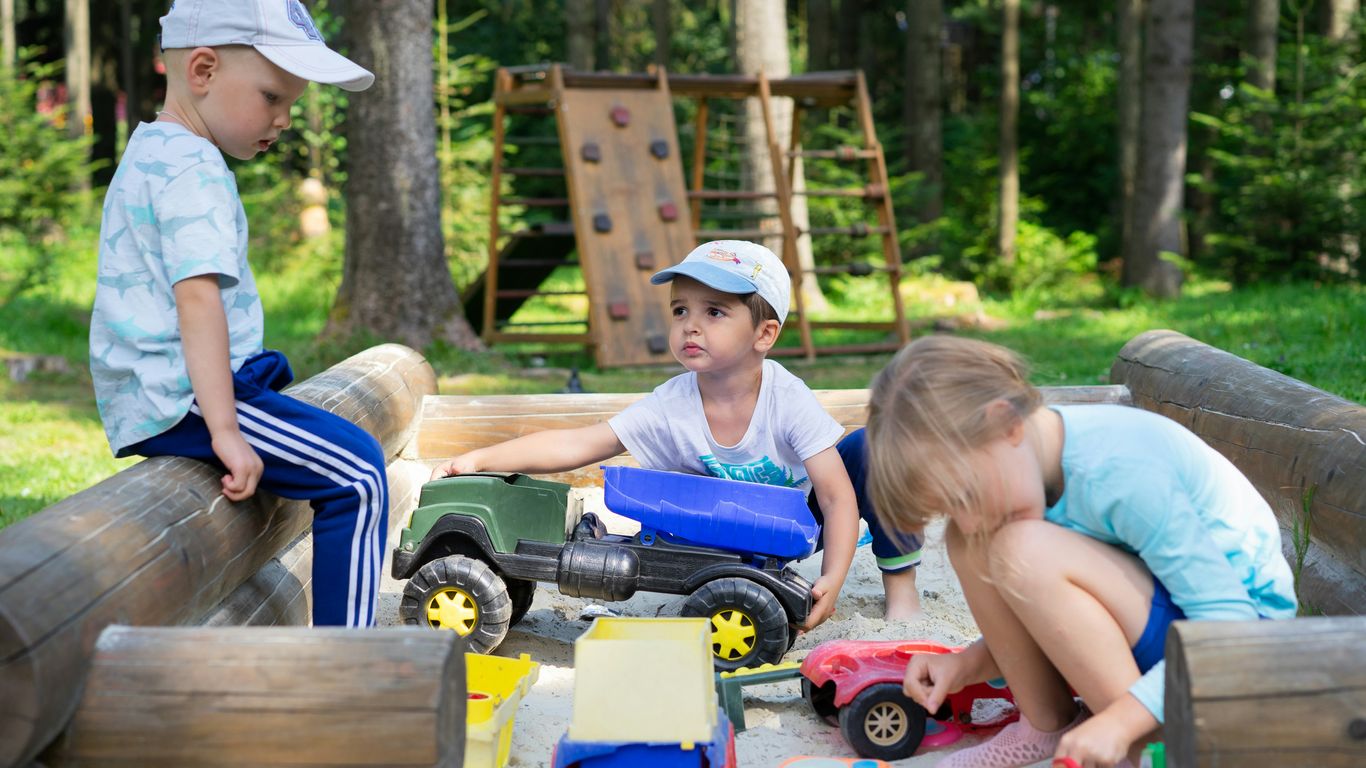
Outdoor surfaces and equipment give children feedback about how their bodies work. A child learns to widen their stance on a wobbly surface, slow down before a turn, or lift a foot higher over an obstacle. Repeated practice helps movements become more controlled and confident.
These skills support everyday tasks, from climbing stairs to carrying a cup. They also make active play more enjoyable because children can take part with greater confidence and less frustration.
Supporting healthy sleep, energy, and daily routines
Movement during the day can help children use their energy in satisfying ways. Outdoor time also creates a predictable transition between quieter classroom moments, meals, rest, and departure. For some children, that rhythm makes the day feel easier to follow.
Sleep is influenced by many factors, so outdoor play is not a guarantee of better rest. Still, a day that includes active movement, daylight, and calm transitions gives families and teachers a healthy foundation for consistent routines.
Getting fresh air and safe exposure to natural light
Being outside changes the sensory experience of the day. Children notice breezes, cloud cover, bird sounds, and differences in temperature while they move. Natural light and fresh air can make a routine activity feel distinct from indoor time.
Safety remains part of the plan. Shade, sunscreen practices, weather checks, and limits on exposure during extreme conditions help adults make outdoor time comfortable and appropriate rather than treating all weather as equal.
Creating positive habits around physical activity
Young children are more likely to view movement positively when it is connected with play, friendship, and choice. They do not need to think of outdoor time as training. They need repeated experiences of moving their bodies and feeling capable.
Families can reinforce this attitude with ordinary activities such as walking to a nearby destination, playing with a ball, or visiting a park. The message is simple: movement belongs in everyday life and can be enjoyable.
Why outdoor play strengthens social and emotional skills
Outdoor play often brings children into shared spaces with flexible rules. That combination creates natural practice in cooperation, communication, and emotional regulation. A game can change quickly, and children must listen, respond, and sometimes start over.
Adults do not need to solve every disagreement immediately. Their role is to keep children safe, help name the problem, and support a fair path forward. Over time, children become more able to manage small conflicts with words and patience.
Practicing cooperation, sharing, and taking turns
A swing, tricycle, ball, or pretend cooking area can invite several children to want the same thing. Waiting, trading, assigning roles, and making room for another child are not abstract social lessons; they are immediate needs within the play.
Teachers can model phrases such as “Can I have a turn when you are done?” or “Let’s find a way for both people to play.” With repetition, children begin to use those phrases independently and see cooperation as part of keeping a game going.
Learning to manage frustration and resolve conflicts
Outdoor play can be exciting, which means disappointment can be intense. A tower may fall, a rule may seem unfair, or a child may lose a race. These moments give adults a chance to help children pause, describe what happened, and consider what could happen next.
A calm response does not mean pretending the frustration is small. Children can acknowledge strong feelings while still learning that a problem can be repaired. That is an early foundation for flexible thinking and conflict resolution.
Developing independence through age-appropriate choices
Choice is one of the quiet strengths of outdoor play. Children may decide which activity to try, whether to join a group, or how to use loose materials. Reasonable choices help them practice judgment while an adult remains available.
The best choices are bounded rather than unlimited. Offering two routes, two tools, or two places to begin gives a child real agency without creating an environment that feels confusing or unsafe.
Using active play to reduce stress and regulate emotions
Some children process feelings more easily while moving. Running, digging, pushing a toy, or swinging gently may help a child settle before they can talk about what is wrong. Others need a quiet corner, a familiar object, or a few minutes watching the group first.
Outdoor environments can support both needs. When the space includes energetic and peaceful areas, children have more than one way to return to a comfortable level of alertness.
How nature-based play deepens preschool learning
Nature gives children materials that are varied, imperfect, and constantly changing. A leaf may be wet or dry, a stone may be smooth or rough, and a shadow may move during the morning. These details make abstract ideas visible and invite children to ask their own questions.
Nature-based learning is not limited to a formal lesson about plants or weather. It can happen during block play, a story, a walk, or a quiet moment beside a garden. The teacher’s work is to notice the learning already underway and add just enough language or structure to extend it.
Turning natural materials into tools for exploration
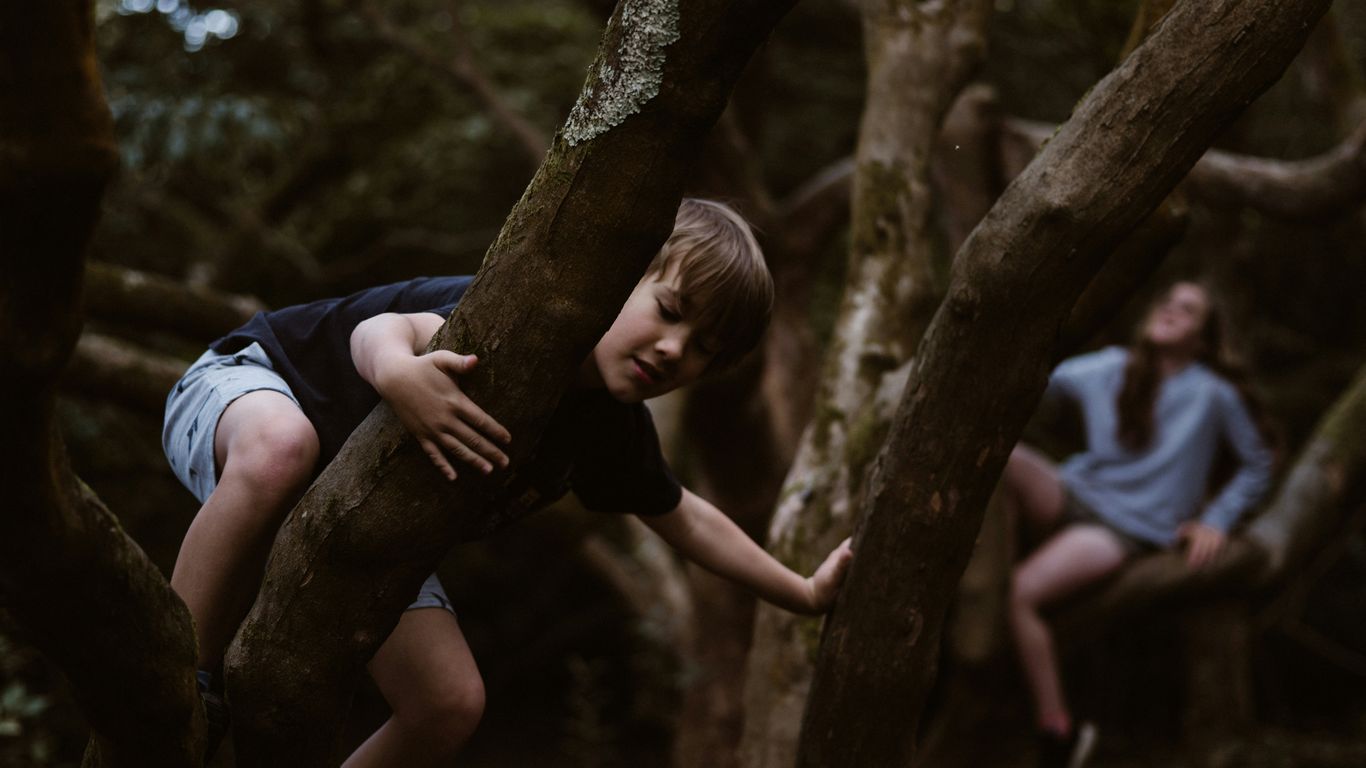
Sticks, pinecones, leaves, stones, and mud can become building materials, sorting objects, pretend food, or marks on the ground. Because these materials do not come with one fixed purpose, children have to decide how they might be used.
That freedom encourages experimentation. A teacher might offer baskets or trays for collecting, then ask children to compare what they found. The emphasis stays on observing, trying, and explaining rather than producing a perfect craft.
Introducing early science and environmental awareness
Children can investigate what sinks or floats, where insects gather, how shadows change, or what happens when soil becomes wet. These observations introduce habits of science: noticing, wondering, predicting, testing, and revising an idea.
Care for the environment can grow from the same experiences. Returning natural materials, staying on appropriate paths, and treating living things gently gives children a practical understanding of respect rather than presenting it as a rule with no context.
Exploring numbers, patterns, shapes, and measurements outside
Outdoor spaces are full of early math. Children can count steps, compare the lengths of sticks, find circles and triangles, arrange stones by size, or create repeating patterns with leaves and pebbles. The concepts become connected to objects children can touch and move.
A simple comparison can lead to a longer conversation. After children sort materials, an adult might ask which group has more, what would happen if one item moved, or how they could make two groups equal. These prompts keep math active and meaningful.
A table like this can help adults match an outdoor invitation with the kind of thinking it encourages:
| Outdoor invitation | Early concept | Question to extend play |
|---|---|---|
| Sort leaves by size | Comparison and classification | How could we make another group? |
| Build with sticks | Balance and spatial reasoning | What could support the middle? |
| Count stepping spots | Number sense | How many more spots are needed? |
| Trace shadows | Change and observation | What might happen later? |
The table is not a prescription for turning play into a worksheet. It is a reminder that children are already exploring mathematical ideas when adults give them time to notice and describe relationships.
Connecting stories, art, and sensory play to the natural world
A walk can inspire a story about a migrating bird, a collection of textures can become a collage, and damp sand can become part of a sensory scene. These connections allow children to revisit an outdoor experience through words, images, movement, and touch.
Reading or creating after outdoor exploration can also help children remember details. They may draw the place they visited, dictate a story about a small discovery, or use classroom materials to recreate a landscape. The experience moves between outside and inside without losing its meaning.
Summer Camp at River City Preschool
Ages 5–12 · May 28 – Aug 9 · 7am–5pm · Swimming, Sports, Field Trips & Meals included!
Outdoor play and classroom time work better together
The choice is not outdoor play or classroom learning. Preschoolers benefit when the two settings inform each other. A question raised outside can become a classroom investigation, while a story, song, or counting idea from indoors can become more vivid when children encounter it in the real world.
A balanced day also respects children’s need for different kinds of attention. Sometimes they need a focused conversation; sometimes they need to move before they can focus again. Good planning makes space for both.
Reinforcing classroom concepts through real-world experiences
If children are learning about shapes, they can search for shapes in playground equipment, windows, or natural objects. If they are discussing stories, they can act out a familiar sequence outside. If they are counting, they can count footsteps, buckets, or collected objects.
These experiences give classroom language a practical anchor. Children can return indoors with something they saw, tested, or wondered about, making follow-up discussions more specific and memorable.
Giving children a productive break from structured activities
A break does not have to mean a break from development. Free movement can refresh attention, release physical tension, and give children a chance to interact in less formal ways. Afterward, some children are ready to listen, draw, or participate with greater ease.
The transition matters. A short warning, a consistent signal, and a calm return routine help children shift from outdoor energy to classroom focus without making either setting feel like a punishment.
Helping teachers observe different strengths and learning styles
Children may show abilities outside that are less visible during a table activity. One child may organize a group game, another may notice a tiny change in the environment, and another may persist with a difficult physical challenge. These observations give teachers a fuller picture of each child.
At River City Preschool, active play and hands-on learning are part of a full-day preschool setting. Watching children across indoor and outdoor experiences can help adults offer support that fits the child rather than assuming every child will show understanding in the same way.
Balancing guided activities with open-ended exploration
Guided invitations can introduce a useful tool or question, while open-ended time lets children take the idea somewhere unexpected. Both have a place. Too much direction can narrow play, but no adult support at all can leave some children unsure how to begin.
A teacher might demonstrate how to use a magnifying glass, then step back while children choose what to examine. The adult remains attentive, adds vocabulary when helpful, and allows the children’s questions to shape what happens next.
Making outdoor play inclusive and meaningful for every child
Outdoor play is not automatically accessible just because it happens outside. Surfaces, equipment, noise, weather, social expectations, and unfamiliar materials can create barriers. Inclusive planning asks what each child needs in order to participate with dignity and genuine choice.
The aim is not to make every child play in the same way. It is to create enough pathways into the experience that children can move, observe, connect, or rest according to their abilities and interests.
Adapting activities for different abilities and mobility needs
Adults can consider firm routes, reachable materials, stable seating, lower equipment, and adapted tools before an activity begins. A child who cannot use one piece of equipment may still take part in the same shared investigation through observation, collecting, signaling, or a different movement pattern.
Small changes can make a major difference. The important question is not whether an activity looks the same for everyone, but whether every child has a meaningful way to belong and contribute.
Offering choices for active, sensory, and quiet play
Some children seek vigorous movement, while others prefer water, sand, textures, drawing, or watching. A thoughtfully arranged outdoor area can include active zones, sensory invitations, and quieter places without labeling one choice as better than another.
Choice also supports regulation. A child may begin with a quiet activity and later join a running game, or move away from a noisy group before becoming overwhelmed. That flexibility helps children listen to their own needs.
Creating welcoming spaces across cultures and family backgrounds
Children bring family experiences, languages, traditions, and ideas about play with them. Songs, stories, dramatic-play themes, and materials can reflect that variety without turning any child into a spokesperson for a whole culture.
Teachers can invite families to share suggestions and make space for multiple ways of participating. A welcoming environment is built through everyday respect, accurate representation, and curiosity rather than assumptions.
Supporting children who feel hesitant about outdoor activities
Not every child feels eager to run into an open space. New sounds, insects, dirt, heat, or group games may feel uncomfortable. A familiar adult, a predictable first step, and permission to observe can help a hesitant child build trust.
Adults should avoid turning participation into a public test. Sitting nearby, offering a small role, or inviting one friend to join may be more effective than repeated encouragement. Confidence often grows after a child has had a few calm, successful experiences.
How preschool teachers and families can plan better outdoor play
Strong outdoor play does not require expensive equipment or a perfectly designed yard. It requires attention to safety, timing, materials, weather, and children’s interests. Planning creates the conditions for play, then leaves enough room for children to make the experience their own.
Teachers and families can also share observations. A child who loves collecting at home may be ready for a sorting invitation at school, while a child who is cautious on playground equipment may need a gentler entry point in both places.
Choosing safe spaces, materials, and age-appropriate challenges
Adults should check surfaces, boundaries, equipment, small objects, and visibility before children begin. Materials need to be sturdy, clean, and appropriate for the children using them. Challenges should invite effort without requiring a skill a child has not had a fair chance to practice.
Safety does not mean removing every manageable challenge. Children need opportunities to climb, balance, carry, and test ideas, with adults nearby to prevent serious harm and teach safer ways to proceed.
Building outdoor play into everyday schedules
Outdoor time is easier to protect when it appears on the daily rhythm rather than waiting for a spare moment. Even a modest, consistent period can give children a dependable opportunity to move and explore. Families can build similar habits through neighborhood walks, courtyard play, or short trips to a park.
Consistency matters more than making every outing elaborate. A familiar routine lowers the effort required to get started and helps children know what to expect.
Preparing for weather, clothing, sun, and hydration
Comfort supports participation. Layered clothing, shoes suited to the surface, hats, water, and shade can make outdoor play more manageable across changing conditions. Adults should follow local health guidance and adjust plans when heat, cold, air quality, storms, or wet surfaces create a genuine concern.
It also helps to teach children practical habits: drink water, tell an adult when they feel too hot or cold, and pause when their bodies need a break. These habits are part of learning to care for themselves.
Knowing when to supervise closely and when to step back
Young children need active supervision around hazards, water, climbing equipment, traffic, and unfamiliar situations. In lower-risk play, adults can move close enough to notice problems while allowing children to direct the activity. That balance protects safety without taking over every decision.
Stepping back is not the same as disengaging. A teacher or caregiver can listen, scan the space, and remain ready to help while giving children time to negotiate, experiment, and solve ordinary problems.
Measuring engagement without turning play into another lesson
Adults can observe whether children return to an activity, include others, try a new strategy, communicate an idea, or recover after difficulty. These signs often say more than whether a child completed a planned product.
A short note or conversation can capture what happened without interrupting the play. For families comparing care options, practical questions about schedules, routines, and costs can also help; a guide to preschool sibling discounts is useful when more than one child may enroll.
The best measure is not how closely children follow an adult’s script. It is whether they are safe, involved, curious, and developing the confidence to take their next step.
Conclusion
Outdoor play gives preschoolers a rich setting for movement, relationships, imagination, and early academic thinking. When it is planned with care and paired with classroom experiences, it supports children as whole people rather than separating learning from living.
Frequently Asked Questions
How much outdoor play does a preschooler need?
The right amount depends on the child, the setting, the weather, and the daily schedule. Regular opportunities for active movement and open-ended exploration are more useful than treating one exact number as a universal rule.
Does outdoor play replace classroom learning?
No. Outdoor play complements classroom learning by giving children practical ways to explore ideas, communicate, move, and solve problems. Indoor and outdoor experiences are strongest when they connect.
What if a child does not enjoy playing outside?
Start with a low-pressure activity that matches the child’s interests, such as drawing, collecting, water play, or watching others. A familiar adult and the freedom to observe can make participation feel safer.
Can quiet children benefit from outdoor play?
Yes. Outdoor play does not have to mean running or joining a large group. Quiet observation, sensory activities, reading, drawing, and small-group play can all support learning and well-being.
How can adults make outdoor play safer?
Check the space and equipment, supervise hazards closely, prepare for weather, provide water, and choose challenges that fit the children’s abilities. Safety planning should allow reasonable exploration rather than eliminating every challenge.
What are good outdoor activities for preschoolers?
Simple options include ball play, walking, balancing, collecting natural materials, pretend games, water or sand play, gardening, and looking for patterns or shapes. The most useful activities leave room for children to make choices.
How can families encourage outdoor play at home?
Keep a few easy materials available, build outdoor time into familiar routines, and join children without directing every moment. A short walk, a sidewalk drawing session, or free play in a safe yard can be enough to begin.
Plan a Preschool Visit
If you are looking for a Peoria program that combines full-day care with hands-on learning and active play, explore enrollment and ask about a tour. A conversation can help you compare routines, schedules, and the kind of daily experience that fits your family.
More Ways to Make the Most of River City
Exclusive programs and perks for River City Preschool families
Summer Camp 2026
A full summer of swimming, sports, field trips, and fun for kids ages 5–12. May 28 – August 9, 7am–5pm. Breakfast, lunch & snacks included!
Swimming Lessons
Expert swim instruction for all ages — from Baby Sharks (12mo+) to competitive Team Training. Build confidence and water safety skills.
50% Off The Clubs at River City
As a River City Preschool family, you get an exclusive 50% discount on membership — pools, tennis, fitness, and so much more!
More From River City Preschool